Buy Raw Israeli Honey Online — Galilee & Golan Apiaries
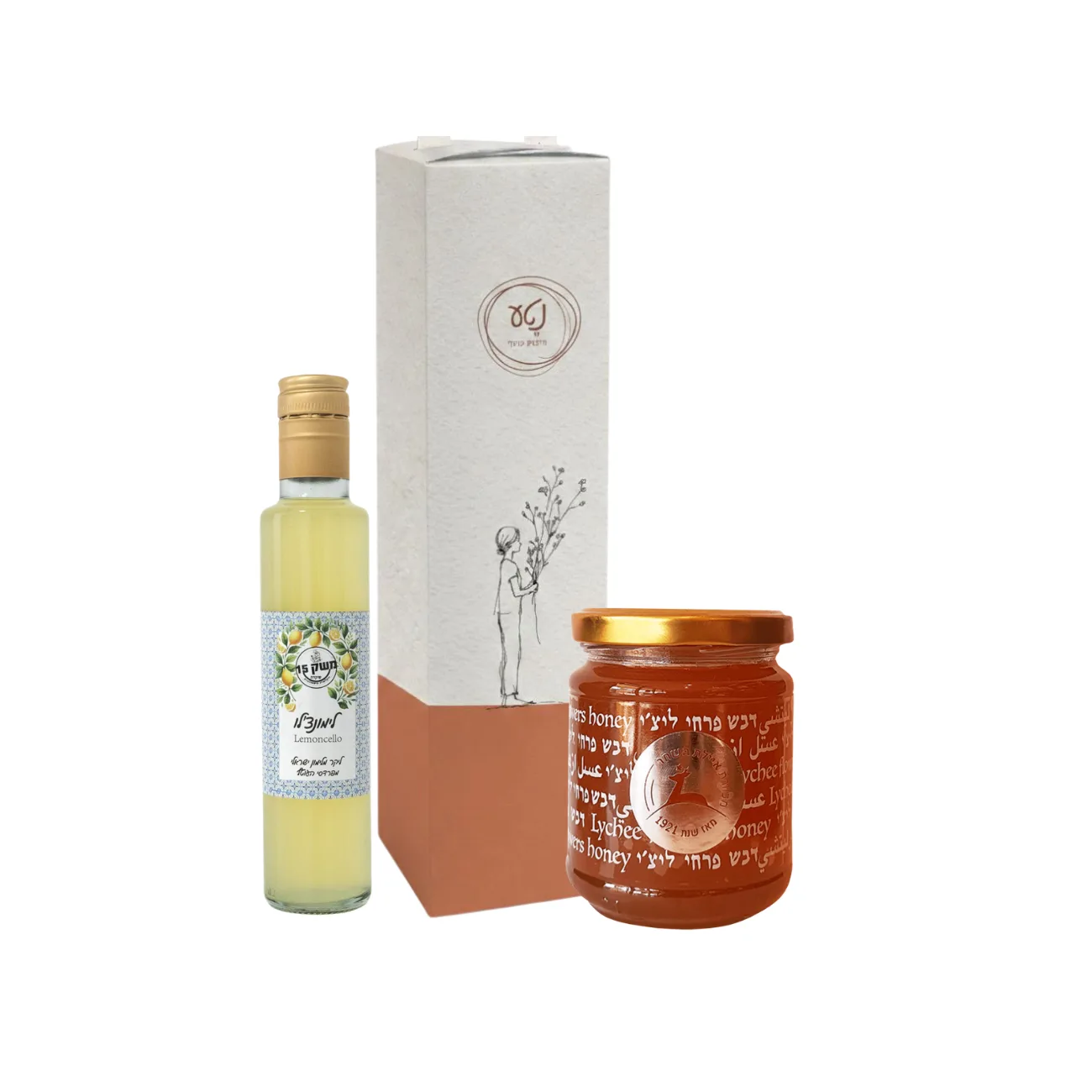
Looking to buy raw Israeli honey online and have it arrive fresh anywhere in Israel? Raw honey is honey that is never heated or fine-filtered, so it keeps its natural pollen, enzymes and antioxidants — and the apiaries of Israel's Galilee, Golan and Negev produce some of the most aromatic raw honey in the world. Every jar in our gift boxes comes from a named apiary, and 60% of what you pay goes straight back to the producer. For the wider picture, see our guide to where to buy Israeli gifts that support real producers.
Hibuk Otef — The Story Behind Every Gift
Hibuk Otef (“Enveloping Embrace”) is a unique boutique gift initiative that brings together products from the communities of the Gaza Envelope and Israel’s southern and northern frontier, alongside works of art that commemorate the beauty of the region. The project was founded to support local producers, farmers and entrepreneurs who were affected. 60% of revenues go directly to producers from the affected communities.
What Makes Israeli Raw Honey Different
Israeli raw honey is prized because it is single-region, unheated and unfiltered — bottled straight from apiaries that have worked the same hills for decades. Erez Apiary, on the Gaza border, was founded in 1950 and is one of the oldest apiaries in the country, known for clean, disease-free honey and for practising sustainable beekeeping long before it was fashionable. In the Galilee, boutique hives forage on wild anemone, sage and lavender, giving a darker, more complex honey than the pale, blended supermarket kind. Because nothing is pasteurised, the honey keeps its pollen, live enzymes and aroma. As Neta puts it, “a good jar of honey should taste of the exact hillside the bees flew over.” Shelf life on our jars is at least 6 months, and each one carries the name of the family that made it.
Raw vs. Regular Honey — What You're Actually Buying
Raw honey is minimally processed: it is not heated above hive temperature and not fine-filtered, so it retains bee pollen, natural enzymes and antioxidants. Regular commercial honey is usually pasteurised and filtered for a clear, uniform look — a process that removes impurities but also strips out some of the pollen and heat-sensitive compounds. Nutrition researchers note that raw honey contains a wide range of amino acids, minerals and enzymes that pasteurised honey loses, which is why many buyers pay more for it. In practice the difference is easy to taste: raw honey is thicker, cloudier and crystallises over time (a sign it is genuine, not a fault). For a gift, raw honey signals care and quality — you are sending something alive, not a mass-produced jar. Learn more about the mission side in our post on Israeli honey that supports farmers.
How to Tell If Israeli Honey Is Really Raw
Genuine raw honey gives itself away in three ways — cloudiness, crystallisation and a single-source label — and every jar we send passes all three. Real raw honey is slightly cloudy or opaque, because suspended pollen grains, propolis and fine beeswax stay in the jar; if honey is crystal-clear and pours like syrup, it has almost certainly been heated and fine-filtered. Second, virtually all authentic honey crystallises over time — most raw honeys begin within 1 to 6 months — so a jar that stays perfectly liquid for a year is a warning sign, not a mark of quality. Crystallisation is simply glucose separating out around the honey's natural pollen "seed" particles, and gently warming the jar returns it to a smooth liquid with no loss of quality. Third, read the label: it should say raw, unpasteurised and unfiltered and list a single ingredient — honey — from a named apiary. As beekeepers put it, “there is no home test that proves rawness better than knowing exactly which hillside the honey came from.” That is why each of our jars carries the name of the family that made it, so you are never guessing.
Raw Honey for Tea, Skin and the Everyday Jar
Raw honey earns its price well beyond the gift box: it is rich in antioxidants — phenolic compounds and flavonoids — that pasteurised honey loses, and it works in tea, on skin and straight from the spoon. In tea it is the classic remedy for a sore throat or a winter cold, but there is one rule worth knowing: never stir honey into boiling water. Temperatures above about 40°C break down the very enzymes and antioxidants you paid for, so let the cup cool to pleasantly warm first, then add the honey. On skin, honey's natural antibacterial and antioxidant properties are why it has long appeared in salves for dryness and minor blemishes. And on the table, a single-region Israeli honey turns a cheese board, a bowl of yoghurt or a slice of challah into something memorable. Because ours is never heated, it keeps these active compounds intact — a working ingredient, not just a sweetener. For the moment when honey matters most, see our guide to sending apples and honey for Rosh Hashanah; the new-year dip is the single best-loved use of an Israeli honey jar.
Honey Varieties from Israel's North and South
Israel's small size hides real variety — our jars come from at least three distinct regions, each with its own flavour. Galilee wildflower honey (Moshav Manot, Hula Valley) is dark and aromatic, gathered from anemone, sage, dodder and lavender that grow along the Lebanon-border hills. Golan and Hula Valley honey from Kibbutz Ayelet HaShachar is one of the finest "northern" honeys, rich and floral from high-altitude blossoms. Negev and Mediterranean honey from Erez Apiary on the southern border carries a deeper, warmer note from desert-edge flowering. All are kosher under local rabbinate supervision, most Badatz. If you are choosing honey for Rosh Hashanah, any of these dips beautifully with apple — the classic sweet-new-year pairing — while working just as well year-round in tea or on a cheese board.
Choose by Budget — Honey Gift Boxes Delivered in Israel
Every box below is in stock and delivered anywhere in Israel in about 7 business days; there is no minimum order, so you can send a single jar-and-treats box or a hundred. Prices are in shekels and rise from small tokens to generous gifts.
מארז מתוק לראש השנה — ₪70
A compact two-item box: a 250 ml bottle of limoncello or pomegranate liqueur and a full 250 g jar of Israeli honey from the Upper Galilee hills. ⚠️ Note: this box contains alcohol — check your destination country import rules before shipping. View the box.
מארז שקד — ₪77
Honey paired with boutique treats and a Rimonim liqueur touch — a warm little gift that still leads with the jar. View the box.
מארז יהל — ₪95
A step up: honey alongside chocolate and Galilee-made extras, presented for gifting. View the box.
מארז אפיק לחג — ₪139
A fuller festive box combining Golan wine and northern honey — a proper "chag" gift for a family. View the box.
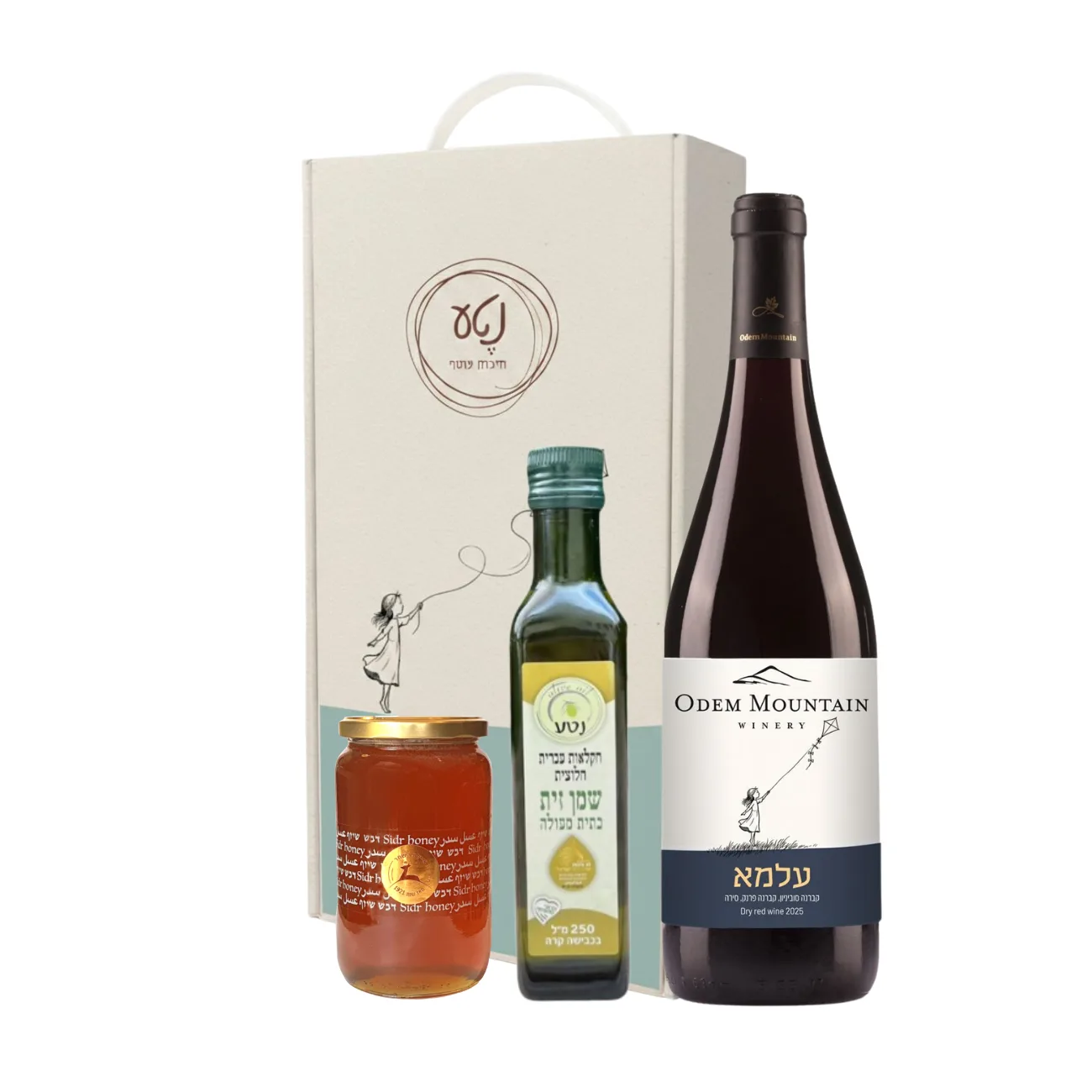
מארז יקיר — ₪177
Our most generous honey-forward box, with wildflower honey from the northern apiaries at its centre. View the box.
How Much Does Raw Israeli Honey Cost?
A raw-honey gift box from a named Israeli apiary runs from about ₪70 to ₪177, delivered anywhere in Israel in roughly 7 business days, with 18% VAT already included in the price. The entry box at ₪70 is a compact sweet-new-year jar-and-treats gift; the ₪177 box centres a full jar of northern wildflower honey with boutique extras. There is no minimum order — send a single box or a hundred for a corporate run — and 60% of what you pay goes straight to the producer. Worldwide shipping is available too, usually up to 15 days (about 7 days by express for an added fee), and self-pickup from our Shilat packing centre is free. Compared with a supermarket squeeze-bottle, you are paying for single-region, unfiltered honey and a direct line to the family that made it.
Meet the Apiaries Behind the Honey
The honey in these boxes is not anonymous — it comes from three named apiaries we work with directly, and 60% of the box price goes back to them.
Moshav Manot Apiary (Western Galilee). A small boutique hive in Moshav Manot, where the bees forage on Galilee wildflowers — anemone, sage, dodder and lavender. The result is a dark, aromatic honey that carries the scent of the Carmel and the northern valleys in a single jar. Manot sits close to the Lebanon border, one of the northern producers we prioritise while the region lives under wartime pressure.
Ayelet HaShachar Honey (Hula Valley). A veteran apiary at Kibbutz Ayelet HaShachar, whose honey is regarded as one of the finest "northern" varieties, drawn from Golan and Hula Valley blossoms. The kibbutz was a frontline community in earlier Lebanon-border conflict and keeps its hives working through the current one — resilience you can taste.
Erez Apiary (Kibbutz Erez, Gaza border). Founded in 1950, one of Israel's oldest apiaries and a sustainable-agriculture pioneer, known for clean, disease-free honey with the deep scent of Negev and Mediterranean bloom. You'll also find Erez products in our Be'eri and Erez gift boxes.
How Delivery and Kosher Work
Orders within Israel arrive in about 7 business days, and there is no minimum — order any quantity, from one jar-box to a corporate run. All boxes are kosher under local rabbinate supervision, most Badatz, and product shelf life is at least 6 months. Prices shown are in shekels; Israeli VAT of 18% is already reflected in the consumer price. We ship worldwide too — cost depends on size, weight and destination, with delivery usually up to 15 days (about 7 days by express, for an added fee). Self-pickup is free from our packing centre at Arbel 1, Shilat industrial zone, at the entrance to Modi'in.
Frequently Asked Questions
Is the honey really raw and unfiltered? Our jars come from boutique apiaries that bottle honey without pasteurising or fine-filtering it, so it keeps its natural pollen, enzymes and aroma. Raw honey is naturally thicker and cloudier and may crystallise over time — a sign it is genuine.
Is the honey kosher? Yes. All our boxes are kosher under local rabbinate supervision, and most carry Badatz certification. We can match specific kashrut requirements on request.
Can you deliver honey gifts anywhere in Israel? Yes — we deliver nationwide, usually within about 7 business days, and self-pickup from Shilat (entrance to Modi'in) is free. There is no minimum order.
Do you ship honey abroad? Yes, we ship worldwide. Shipping cost depends on the size, weight and destination; delivery is usually up to 15 days, with a faster ~7-day option for an added fee.
How long does the honey keep? Shelf life on our products is at least six months. Raw honey is very stable and does not spoil when stored sealed at room temperature; if it crystallises, gently warming the jar returns it to liquid.
How to Order
Order on our website, by WhatsApp at 054-2207955, or by email — and we'll come back with a gift matched to your budget and occasion.
Written by Neta Lin Cohen — founder of Hibuk Otef, architect and Bezalel graduate, with 30+ years of experience in culinary gifting.